Lord, help my mom see…

A disclaimer:  My mother edits all my blogs.  Since this blog is about her, it’s not been edited…please be patient if I missed something.  I couldn’t write this blog without my mom–she’s amazing!

P5106698

My parents with our entire family.

Well, it’s the week after mother’s day. I’ve been pondering what it means to be a “good mother,” for while but it took spending a weekend with my wonderful mom to solidify my thoughts. My last post I talked about a painful moment in my childhood where my mom, in an effort to help me fit in better at school, asked me to “change” my behavior. (I hugged everyone, and I mean everyone, and I wanted to show people how much I liked them by hugging them.) After reading the blog my mother shared it on Facebook and said, “so many regrets.” This comment broke my heart. I didn’t want her to regret anything. I was simply reflecting on lessons I learned and applying them to how I raise Mattie. So, this blog is addressed to my mom. Let me tell you what I learned about being a “good mother,” from one of the best.

1. Mom, you taught me to always evaluate who I am as a mom. You do this even now. You question your motives. You analyze your actions. You worry that it’s never enough. I believe part of being a good mom is learning from mistakes, and not assuming that I know what I’m doing, because I don’t.   You didn’t either, but because you cared, you didn’t have to know—wanting to do it right made all the difference.

2. Mom, you taught me that sometimes words aren’t needed. There were many times in my childhood where I remember you just holding me as I cried.   You always say you “talked us to death.” I disagree; you always seemed to know when not to speak.

3. Mom, you taught me how to vent. There are times when our frustrations run high and we need to just let it out. You have always been my sounding board. You have always been there to temper my ire with patience and grace (and sometimes the willingness to fight off whoever was hurting me).   I still use you for that today, and you’ve taught me to do the same for Mattie when she’s frustrated.

4. Mom, you’ve taught me that being a good mom means being a good listener—even when it hurts. I remember our long walks where I worked through the hardest moments in my life. You listened. You didn’t try to fix anything. You were simply there. Loving me was enough. You were my companion through turbulent waters. You couldn’t make the storm pass, but you could walk through it with me.

5. Mom, you’ve taught me the power of prayer. I knew you were praying for me when I was growing up. I knew that you trusted that He had a plan, even when you worried what that plan might be. I have the faith that I have now, because you taught me how to live as a Christian.

Part of being a good mom, is knowing that you’ll make mistakes, but trusting that God can take those mistakes and turn them into an amazing blessing.

Finally, mom, here’s something I’ve been learning lately. Part of being a good mom, is knowing that you’ll make mistakes, but trusting that God can take those mistakes and turn them into an amazing blessing. I don’t want to make mistakes any more than you did. But, I know from my own life that the mistakes I make God will use to mold Mattie into an amazing light for Him. I have to trust Him. I’m afraid. I worry. I evaluate. I pray. I love her more than my own life. I learned how to be the mom I am because of you. Please don’t be sad about the mistakes you may have made. Use them to show the world the power of Christ to take any circumstance—even a bull headed girl like me—and make a blessing out of it.

I love you mom. You’re my hero.

Why don’t people get Your grace, Lord…

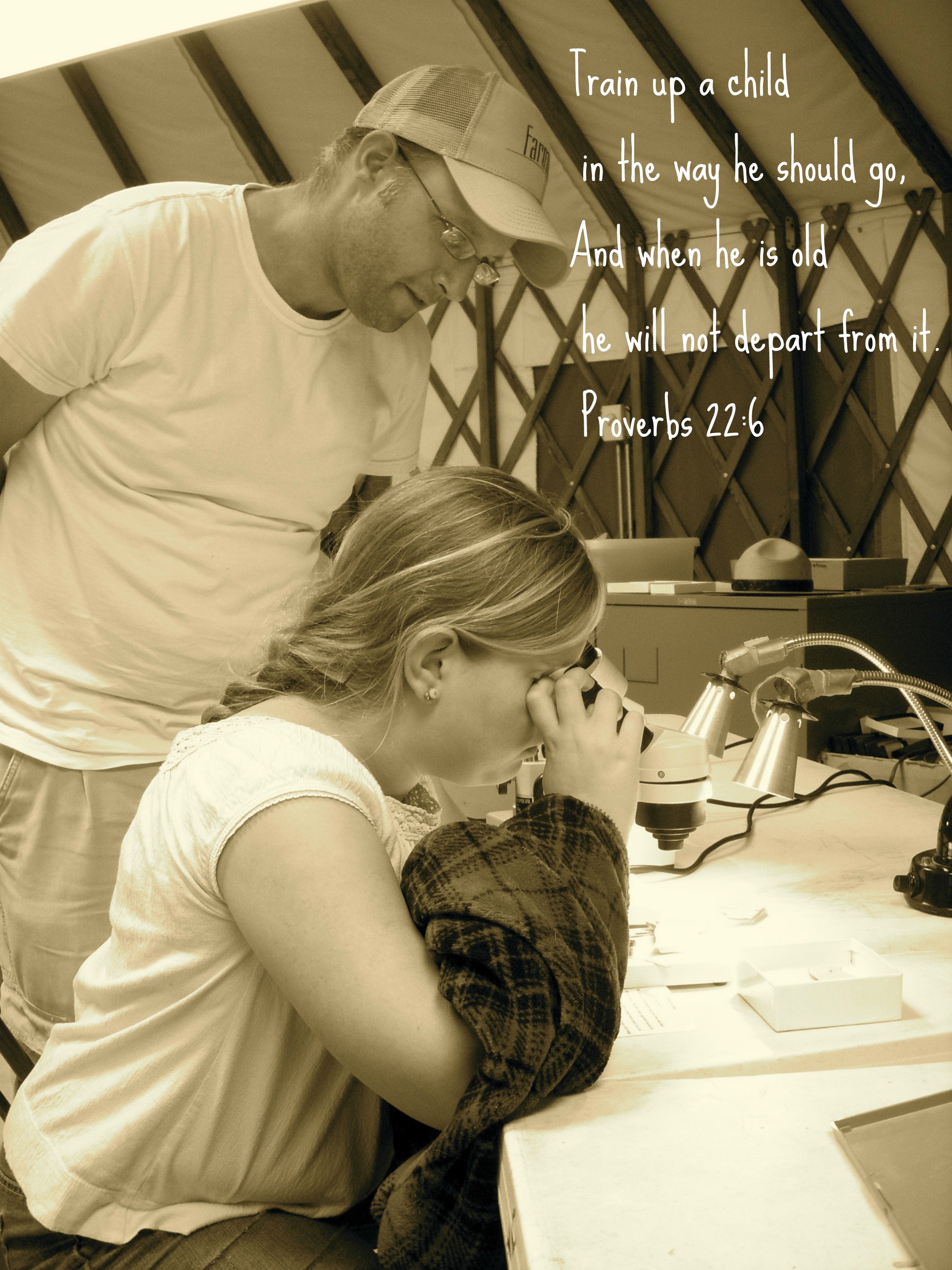
Train up a child

Over our busy Christmas I had the opportunity to sit down with my mother, brother, and his beautiful wife and visit. This doesn’t happen often in our family–that we’re all in the same place, and we have time to just visit.  My brother lives three hours away from us to the east, and my mother and father live two and a half hours away to the south.  So we really only see each other on birthdays and holidays.  So, this time was precious; however, it became stressful to me very quickly.  My brother’s and my relationship has always been a bit strained.  We’re just different enough that getting along wasn’t always easy.  I’m betting I’m not alone in this, as it’s very common among siblings.

 Our discussion was unusual in that my brother and his wife were discussing their faith—something they don’t do often around me because I can be overbearing and opinionated, like my dad.  So the fact that they opened up was great, and my reaction to what they said will probably stop them from doing it again anytime soon, which makes me sad.  (I really need to learn to control my reactions, but I digress)  We were discussing grace—you would think a safe topic as everyone loves grace, and we are all three saved—and when it became “real” to them that they didn’t have to work their way into heaven.  I was shocked to find that they had only recently made this realization.  I immediately said to my brother, “How can you have sat through all of Pastor Bodenhammer’s sermons growing up and not have gotten grace!”  Not a good response.  My brother’s face immediately changed from enthusiasm over this new and wonderful revelation, to a shut-off, defensive wall.  I realized once again that I had blown a great opportunity to connect with him.   Why is it that we so often miss the opportunities to bless our own family?  I could get into analyzing sibling relationships, but I won’t, because that’s not the point of this blog.

 However, this whole discussion got me to thinking (more like ranting, and yes, I need to work on that too) about why people who have the same upbringing, sit in the same pew, go to the same youth groups, and gave their lives to the same God, don’t know Him the same way.  How did my brother, who was saved the Sunday before I was, hear doctrine when I heard grace!?  I also got to thinking…if my brother didn’t get it when he was raised just like I was, then there’s a chance my daughter might not get it either…and “what do I need to do to make sure she ‘gets’ grace?”  So, like I do when I’m not sure about something, I started doing some research.  I discovered this isn’t a new problem.  One of my favorite Baptist preachers, Charles Spurgeon, gave a sermon about this very thing on May 8th 1887:

 “The people to whom I am referring really listen to what the preacher has to say; they are attentive, and they seek to retain in their memories the truths he preaches. They even talk when they are at home of the striking passages, if such there be, in what they have heard. You would suppose that such persons would get a blessing from the gospel; yet they do not.” (http://www.newsforchristians.com/spurgeon/chs2411.html)

 Spurgeon goes on to discuss this phenomenon and then speaks directly to the hearer in hopes of breaking through the “thick scales” on their eyes.  However, I’m not going to reteach what has already been taught.  I do recommend you take a look at the sermon, like most of his writings, it’s insightful.  I do want to spend some time analyzing the issue.

 First, after I’d left the room, my brother confessed to my mother that he didn’t remember any sermon that was taught when he was a child. The only thing he really remembered was a visual using a glass of water and an egg about baptism.  What my brother heard was a message on why we believe in immersion (doctrine), and what I heard that day was a message on the internal transformation salvation brings us.  So that leads me to my first conclusion.

 Not everyone learns the same way.  This is a “well duh” statement, but it’s something I think the church is missing.  Educators have known for years that we need to meet the needs of every learner in the classroom—we need to teach them they way that they learn best.  However, many churches only teach from the perspective of one learning style.  I’m a VERY auditory learner.  I learn best by listening—which is why I remember so much from the sermons of my childhood.  My brother is much more visual—which is why he remembers the example of the egg and water, and not much else.  We don’t process information the same way.  I can walk into any church and be blessed by a biblically based sermon.  He may not get as much out of it, because he doesn’t function like that.  The church he attends now, has video, light shows, a darkened auditorium, and active powerpoints to follow during the sermon.  I find this distracting and, truthfully, annoying.  But, he’s learning and growing there!  When taking our children to church, we need to be aware of how they learn, and if the service doesn’t fit their learning style, we need to augment it!

 So many times, we parents quote Proverbs 22:6, “Train up a child in the way he should go, And when he is old he will not depart from it” and we see it that we have to teach the kids, but when going back to the original Hebrew, the word train actually is the same word that is used for the process of cleaning out a babies mouth after birth.  The word means “create an environment for life.”  To quote Mark Hamby, founder of Lamp Light ministries:

 “Training our children requires more than simply providing an education. We must create an environment of captivating learning, with experiences that motivate them to passionately pursue worthy goals. External rewards will not suffice; motivation must be intrinsic. We must help to ignite a fire from within so that the child’s passion becomes the driving force behind persevering practice that leads to the achievement of excellence. Turning passivity into passion by providing experiences that cultivate their taste for what is Godly, great, and glorious is the essence of true Biblical ‘training.’”

 So, who is responsible for this training?  If you’re the parent, the buck stops with you.  Our job is not to just take our child to church and hope that it sinks in, or to allow our child to hear our discussions of the sermons.  This only works for kids who have active listening skills.  Our job is to stand it the gap for our kids.  If we attend a church that doesn’t have visual or kinesthetic learning as part of the service, then we need to provide that.  Show your child how to take notes during a sermon, or draw a picture with them that teaches the lessons of that day.  Be present, and active.  Don’t just assume because they heard it they learned it.  My daughter is much like me in that she’s very auditory.  She loves church services, but doesn’t enjoy Sunday school as much.  The reason is her learning style.  She soaks up the message in the sermon, often interrupting by asking me questions about what our pastor is teaching (we’ve fixed this by giving her a notebook and when she has a question she has to write it down for discussion after the service).  But, Sunday school is trying.  It’s a lot of reading, and with her dyslexia it’s frustrating for her.  And, although she loves to draw, she doesn’t like structured drawing.  She would much rather be asked to create a picture about the sermon on a blank piece of paper than to have to draw what someone told her to.  So, what’s my job?  I ask her questions about her lesson.  We draw pictures—which I proudly place on our fridge.  I’m active in her learning.

 While sitting in a service, I think there’s something that’s even deeper that we sometimes miss.  We assume that our children “got” the message because we did.  We forget that they are not adults, and that they process things differently.  I’ve noticed this a lot with my daughter.  I’ll visit with her about the sermon and she pulled something completely different out of it than I did.  This is good, but it shows that we need to assume nothing, and actually converse with our children—every day—about the things God is doing in our lives.  If we don’t, we may find that they’re in their mid-thirties and just now “getting” grace—or worse, they may never get it at all.

 Lord, help me to see beyond the day-to-day and see the eternal.  Thank you for my brother’s growth.  I praise you that his walk has become one of joy and service to You.  Help me to show my daughter Your grace and love everyday.  I want her to know You Lord.  Amen

Playlist:

Chris Tomlin, Amazing Grace (My Chains are Gone,) https://www.youtube.com/watch?v=Jbe7OruLk8I

Mark Shultz, I Am, https://www.youtube.com/watch?v=hILaSh78yHQ

Casting Crowns, Stained Glass Masquerade, https://www.youtube.com/watch?v=gzKOrlPuWzo

Staying Alert in Christ,

Megan

Battling Bitterness

DSCN4167
“Break my heart for what breaks Yours.  Everything I am for Your kingdom’s cause…”

These are words to one of my favorite praise songs called “Hosanna.”  They have been a prayer of mine for a long time.  I want to be Christ’s servant in everything I do…it’s a tall order and some days a battle.  I’ve shared with you that I’ve been battling bitterness toward a group of people for a while now.  Two weekends ago God stripped that bitterness from me, and although Satan has tried to drag me back into the muck a couple of times, I’ve managed, with God’s help, to “not go there.”  It’s been a good week.   I’ve felt freer than I have been in a long time.  I can’t say that I’m ready to see these people and share a meal with them, but I’m getting there.  He’s answering my prayers to show me these women through His eyes.  He’s giving me empathy for them, and I’m actually forgiving them.  It’s something I wasn’t able to do in my own strength.  And, because it’s Him that’s refining me, I’m now able to help others in a way that I couldn’t help them before.  Amazingly He’s opened several doors to minister to those going through similar pain.  If these people had asked for my help just two weeks ago, I wouldn’t have answered in the way that He needed me to.

So, I thought I’d share some of the lessons God’s laid on my heart from my time battling bitterness.

1.     Don’t be afraid to tell God how hurt you are.  Many times we as Christians think we shouldn’t be weak.  This allows bitterness to get a foothold in our heart.  It’s a natural progression—in our sin nature—to want to lash out at those who have hurt us.  It’s not in our nature to “turn the other cheek,” and to forgive them.  But, in Ephesians 4:31-32 we’re commanded to, “Get rid of all bitterness, rage and anger, brawling and slander, along with every form of malice. Be kind and compassionate to one another, forgiving each other, just as in Christ God forgave you.”  I’ve found that acknowledging my pain, and giving it to God daily, helps when I am hurting.  It also gives me permission to be okay where I am.  Telling God that I’m hurting opens me up to His will and perfect love.  Locking it all up means that I’m not okay with where I am…and this gives Satan a chance confuse and manipulate me.

2.     Have a plan.  So many times I catch myself running down a list of all the horrible things these women did.  I have found that if I have a plan to stop my thoughts from going down a path that leads to bitterness,  then I can battle the war going on inside me much better.  I have two verses that I claim regularly to keep my mind on the right track.  The first is Philippians 4:8 “Finally, brothers and sisters, whatever is true, whatever is noble, whatever is right, whatever is pure, whatever is lovely, whatever is admirable—if anything is excellent or praiseworthy—think about such things.”  Whenever I caught myself sinking into anger and bitterness,  I would repeat this verse to myself.  Then, I would practice it by listing all the things that are good, and noble, and true about my life right now.

The second verse that helped was Hebrews 12:1, “Therefore, since we are surrounded by such a great cloud of witnesses, let us throw off everything that  hinders and the sin that so easily entangles. And let us run with perseverance the   race marked out for us…”  This verse helped me to remember that when these women were lying about me, and plotting to cause me harm, that God knew the truth.  He had placed witnesses in the heavenly realms that would intercede on my       behalf.  My job was not to worry about what was being said about me, but to focus on the sins that were entangling me and to walk through this trial with God as my companion.

 3.     Happiness is a choice.  When life is hard, it’s easy to get depressed and angry, but when we remember that we can choose to be happy,  then we have control over the outcome of our situation.  So many times I’d run into people who had heard about what I’d been going through.  I would choose to stay positive in my conversations with them.  It wasn’t easy.  I wanted to bad-mouth the women who were hurting me.  I wanted the world to know who they really were…but by choosing to remain calm and trying to stay positive, I left a lot of doors open.  I’ve been able to help others through similar situations because they trusted me and saw that I was trying to follow God through this valley.
4.     Let the God be your Lord.  This is the biggest one.  It’s more important than any other idea I’ve presented.  Lynda Randle, the speaker at the Women’s Retreat a couple of weeks back, said, “Jesus was my savior, but He wasn’t my Lord”  while she was sharing her testimony on the first night.  This phrase stuck with me.  There’s a big difference between Jesus providing a way for us to get to Heaven, and us letting Him be the Lord of our lives daily.  He tells us we must forgive.  So we must.  He tells us that we must pray for our enemies.  So we must.  He tells us to cast our cares upon Him.  So we must.  He must be our Lord.

Bitterness is a stronghold of the enemy.  It is a dark place within our hearts, and if we let it fester it will become a barrier between us and our Lord.  God wants to use us, but He can’t if we’re filled with malice and hatred.  We can’t really see people through God’s eyes when ours are blinded by sin.  If we really mean it that we want to be broken for what breaks God’s heart, we must empty ourselves of self and allow Him to fill us.  So we can say, “Everything I am for Your kingdom’s cause…” Oh Lord grant me that privilege.  Amen.

Staying Alert in Christ,

Megan